How Much Should I Charge for a Sponsored Post?
A brand emails you. They want a post, and they want to know your rate. You open a search, and within ten minutes you have five formulas that contradict each other, three of which are built on follower counts alone.
Here is the part nobody says plainly: there is no rate card, and there never was one. No platform publishes a price, a minimum or a formula. That is not an oversight. It is how the whole thing is designed.
The platforms built the marketplace and stayed out of the price
Both TikTok and Instagram run official systems for connecting brands with creators, and both stop short of the one thing everyone wants them to do.
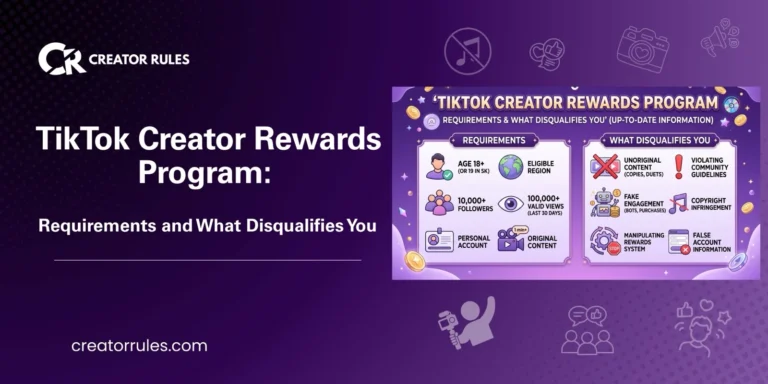
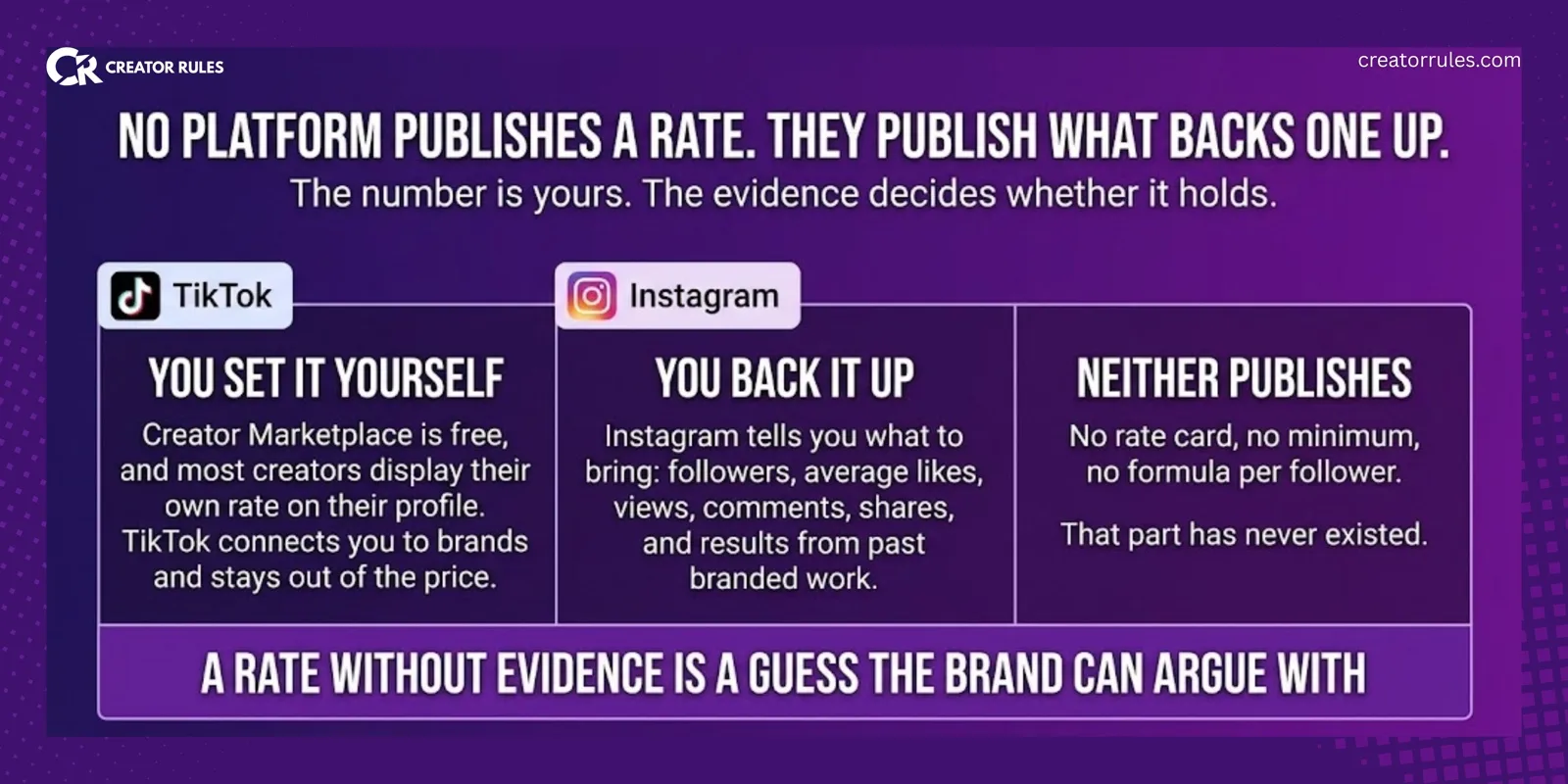
TikTok Creator Marketplace is free to use. Brands search by topic and by country, shortlist creators and run campaigns through it. And on the question of money, TikTok’s own description is telling: most creators already have their rates displayed on their profile. The rate is something the creator brings, not something the platform sets.
Instagram’s creator marketplace works the same way. It connects creators to brands for branded content and partnership ads, and the eligibility conditions are about the account rather than the money: an authentic, established presence, a sufficient follower base, and compliance with community standards. Content flagged as misinformation can cost you that eligibility.
Notice what is missing from both. No suggested price. No range. No per-follower figure. The infrastructure is built, the introduction is made, and the negotiation is left entirely to the two parties.
What Instagram does publish is more useful than a price
There is one piece of guidance that almost nobody quotes, and it is the most actionable thing either platform says about money.
Instagram tells creators to give the brand data: followers, average likes, views, comments and shares from organic content, and results from past branded content deals. Its own words for why are worth keeping: this helps back up the rate you deserve.
Read that carefully. The platform is not telling you what to charge. It is telling you what makes a number defensible once you have named it. That is a different kind of help, and a better one, because a rate that can be justified survives a negotiation and a rate copied from a blog post does not.
So what actually decides the number
Once you accept that the price is yours to set, the question becomes what moves it up or down. In practice it is five things, and follower count is the weakest of them.
Engagement rather than size. A brand is buying attention, and a small audience that reliably comments and shares is worth more than a large one that scrolls past. This is also the number you can prove from your own insights.
What they are actually buying. One story is not one feed post is not a feed post plus a reel plus usage rights. Rights are the item most often given away by accident: permission to use your content in paid ads, and for how long, is a separate thing from the post itself and should be priced as one.
Exclusivity. If the agreement stops you working with competitors for three months, you are selling availability as well as a post. That has a price.
Production load. A video you were going to film anyway costs you little. A concept with a script, locations and three rounds of revisions is a job.
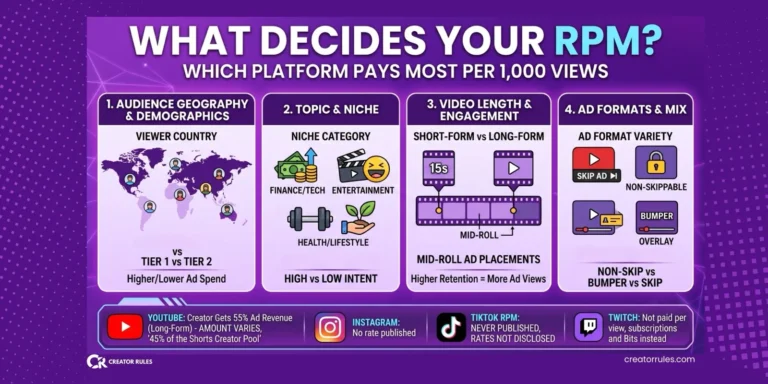
Who the audience is. The same follower count is worth more in a niche where the brand’s customers actually are. Where those followers are based matters too, for the same reasons that make advertising revenue vary so much by country.
Work out your own floor before the conversation
You do not need a market rate. You need a number you can say out loud without hesitating, and that comes from your own figures rather than from anyone else’s.
Start with what the same effort earns you elsewhere. If you know roughly what a video returns through platform revenue, you know what your time is currently worth per piece, and a brand deal should clear that comfortably rather than match it. Add the production hours. Add something for rights and exclusivity if either is being asked for. The result is a floor, not a price, but a floor is enough to stop you accepting the first offer.
Then bring the evidence Instagram describes, because the conversation changes completely when the number arrives with data attached rather than on its own.
When the payment is a product
A large share of first offers are not money at all. The brand sends something, you post about it, and nobody uses the word rate anywhere in the conversation.
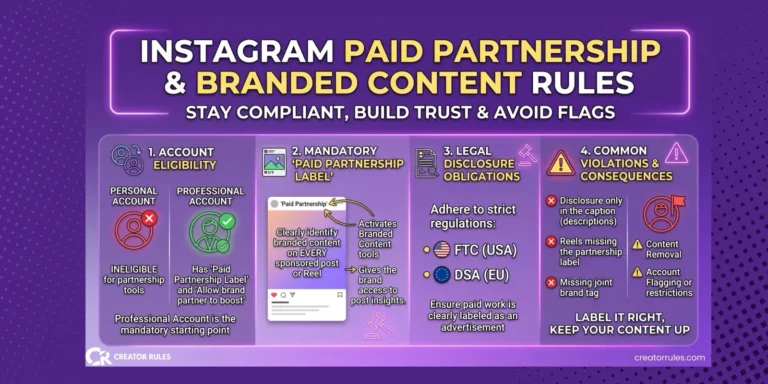
Two things are worth knowing before saying yes. The first is that this is still a commercial arrangement in the platforms’ eyes. Instagram defines branded content as content produced in exchange for value, and a free product is value. The disclosure obligation applies in full, whether or not any money moved.
The second is more practical. A product covers the cost of the product and nothing else. It does not cover the filming, the editing, the writing, or the fact that the post sits on your profile indefinitely. For something you would have bought anyway it can be a fair trade. For anything requiring real production it usually is not, and the brand knows this better than the creator does.
If the answer is still yes, treat it as a paid job in every other respect: agree what is being delivered, agree whether the brand can reuse it in ads, and disclose it properly. The absence of an invoice does not change any of the obligations that come with it.
The rules that come with the money
Whatever you charge, the disclosure obligation is fixed and does not scale with the fee. It applies to gifted products just as much as to paid campaigns, and on Instagram it runs through the branded content tools rather than a line in the caption. We went through exactly how that works in the paid partnership label.
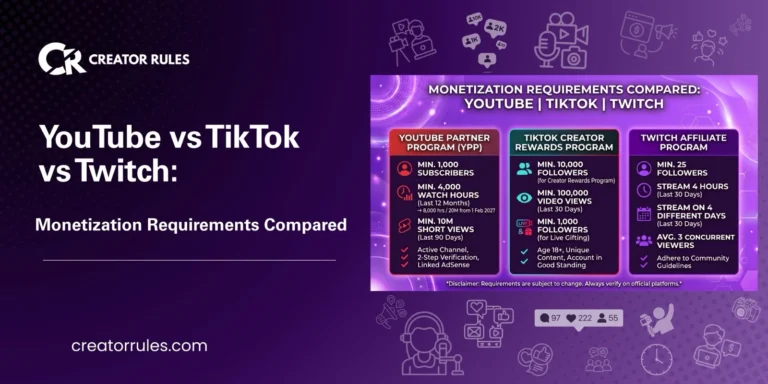
Eligibility for the branded content tools themselves is worth checking before you agree to anything, since the account type and standing conditions apply regardless of what the brand is paying. Those sit alongside the other ways the platform pays, which we listed in what Instagram actually pays for.
Why no list will ever appear
It is tempting to read the absence of a rate card as something the platforms have not got around to. It is not.
A published rate would make the platform a party to a commercial negotiation it has no interest in joining, and it would be wrong the moment it was written, because the same follower count means something different in every niche and every country. What you can find instead are averages from third parties, built on self-reported deals, which is a different thing wearing the same clothes.
The honest position is the one the platforms themselves take. There is no correct number. There is your number, and whether you can show why it is that.