Do I Have to Label AI Content on YouTube?
The rule is triggered by realism, not by AI. Scripts, thumbnails, captions and your own cloned voice need no label.

Platforms change the rules that decide who gets paid, and they rarely explain them in plain language. Creator Rules tracks those changes in one place: monetization thresholds, eligibility criteria, payout terms and the deadlines attached to them.
Every figure here comes from the platform's own documentation, every page links its source, and every page carries the date it was last checked. Where a claim is circulating that the platform has not actually made, we say so instead of repeating it.
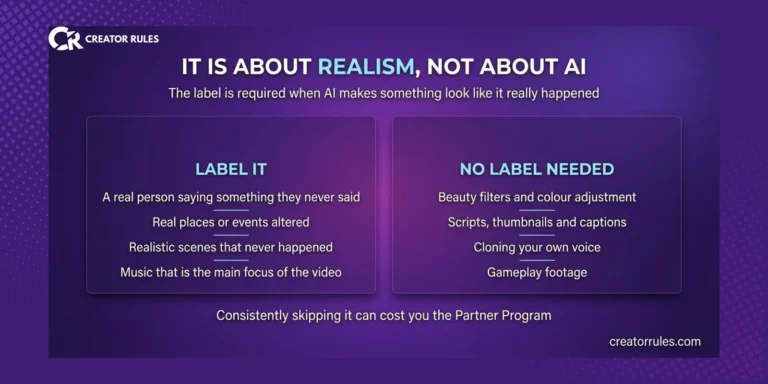
The rule is triggered by realism, not by AI. Scripts, thumbnails, captions and your own cloned voice need no label.
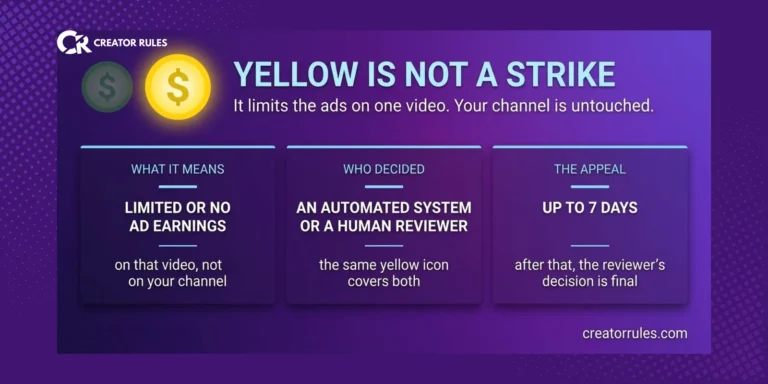
Limited or no ad earnings on one video. It is not a strike, a human review may already be running, and the appeal only happens once.
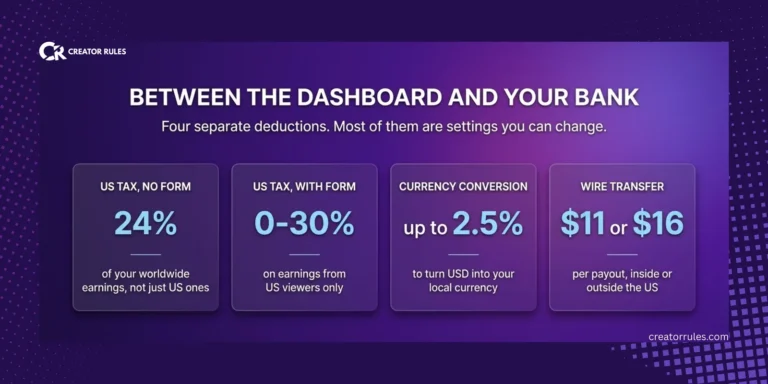
Tax withholding, currency conversion and the payout method each take a separate cut. Most of them are settings you can change.
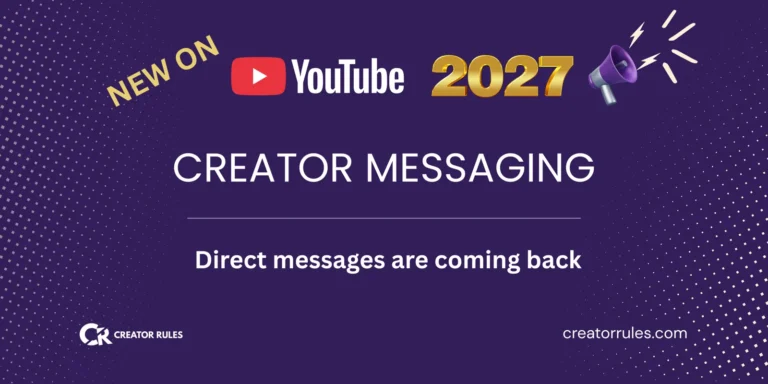
Direct messages are back on YouTube in 40 locations. The requirements are stricter than people assume, and the old problem has not gone away.
Shorts are getting seasons and episodes. What it solves for serialised content, who it is actually for, and the commitment it creates.
Studio is getting feedback on drafts: pacing, structure, storytelling. The question that decides whether it is useful has not been answered.
Viewers will build their own home page feeds by describing what they want. Creators have barely discussed it, and it may change discovery most.
Different viewers can see different thumbnails for the same video. What was announced, what was left out, and where the honesty line sits.
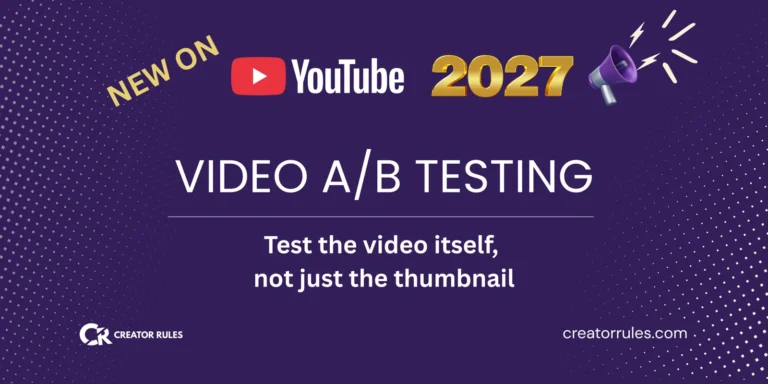
YouTube is adding A/B testing for up to three video cuts. Two limitations nobody is discussing, and how to run a test that teaches you something.
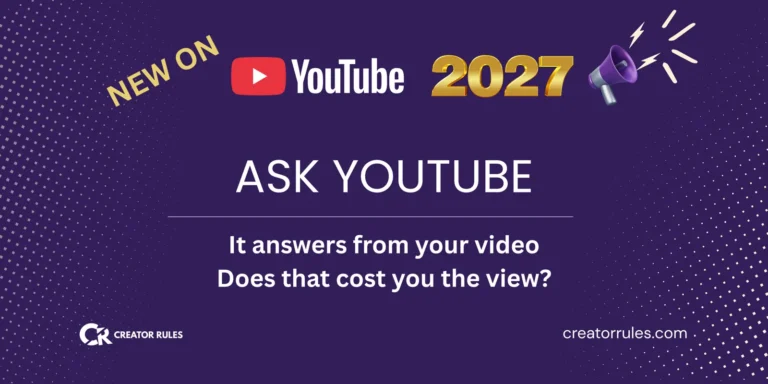
Ask YouTube answers a viewer’s question from inside the video. Which videos that actually threatens, and what YouTube has not said about it.
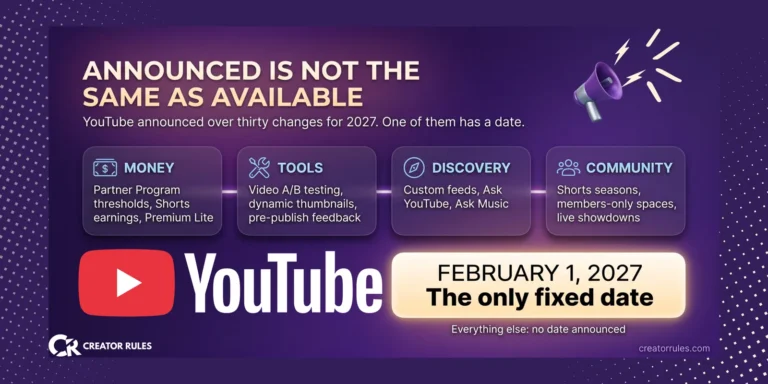
YouTube announced more than thirty changes for 2027. Only one of them has a confirmed date. Here is what is fixed, what is still unknown, and when each change actually arrives.
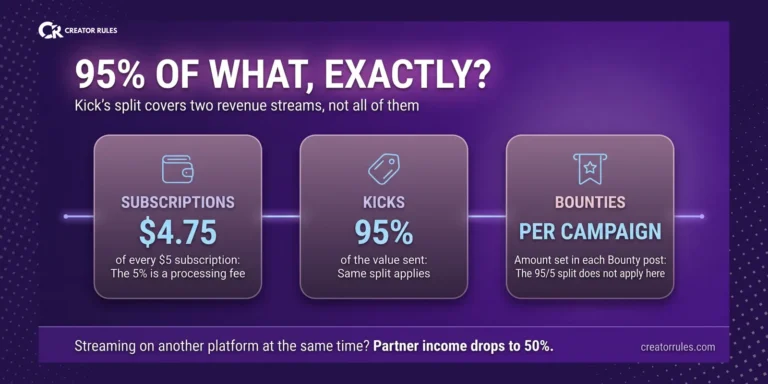
Kick publishes a 95/5 split, but it covers two revenue streams and not the third. The 5% is a processing fee, and multistreaming halves the payout.
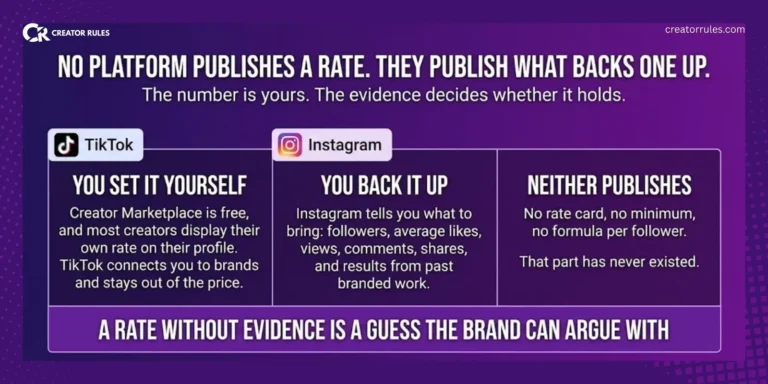
There is no rate card and there never was one. The platforms built the marketplace and stayed out of the price, but they do say what makes a rate defensible.
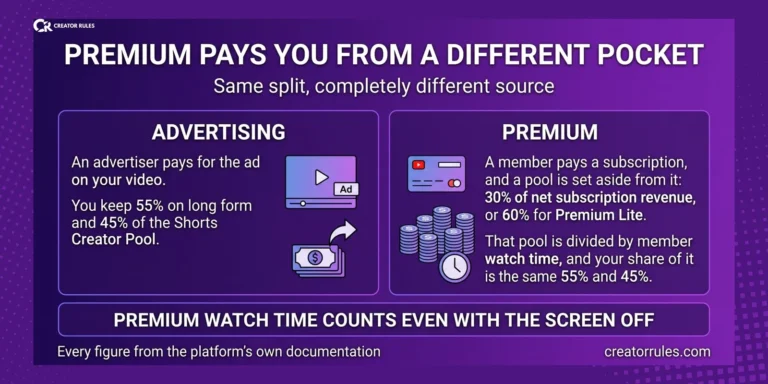
Yes, but the money takes a different route. A pool is set aside from the subscription first, then divided by how much Premium members watched.
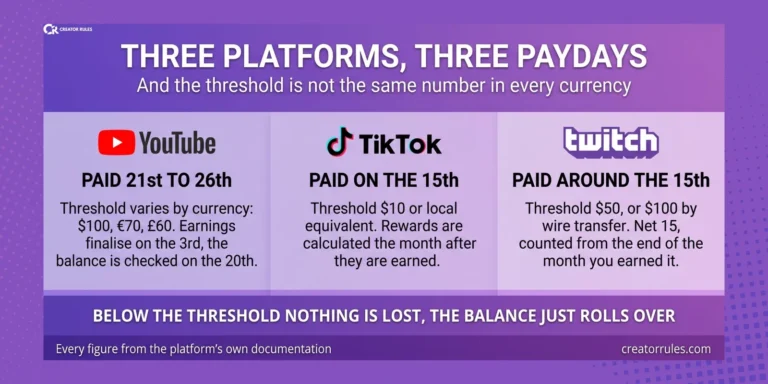
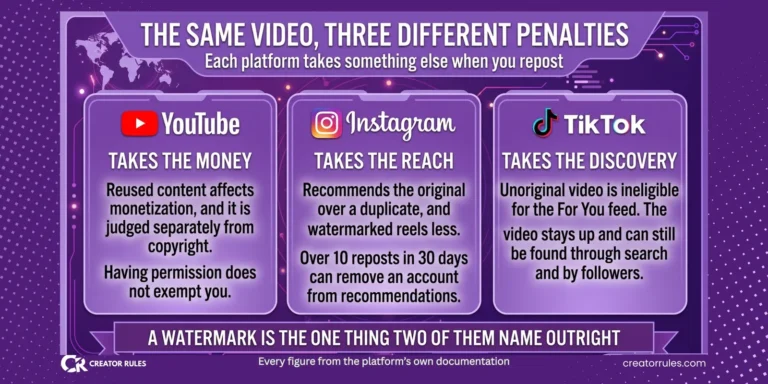
All three allow it and all three do something about it, but not the same thing. One takes the money, one takes the reach, one takes the discovery.
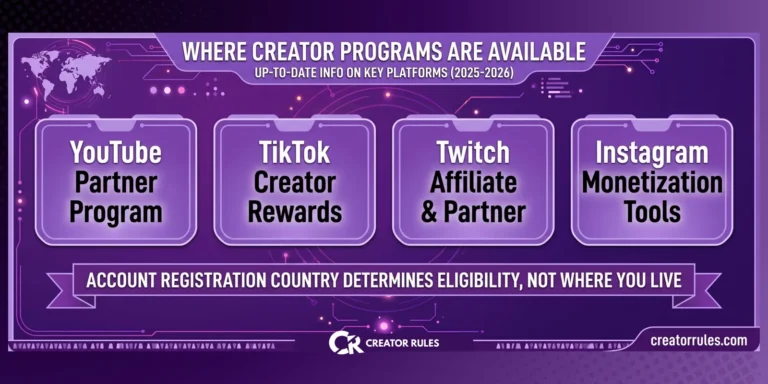
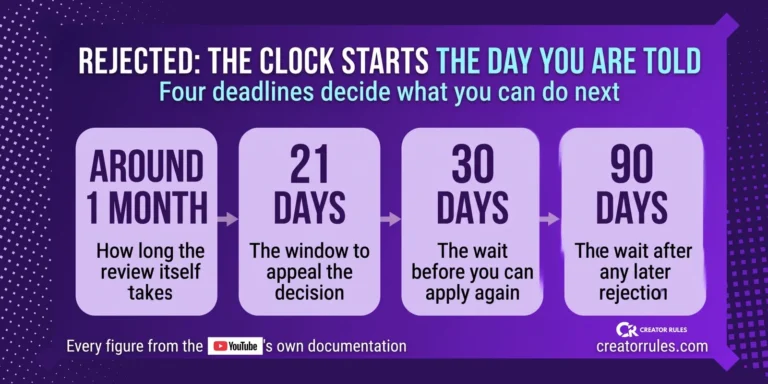
Being turned down for the YouTube Partner Program and being removed from it are two different processes with two different sets of deadlines. Here is which one applies to you.
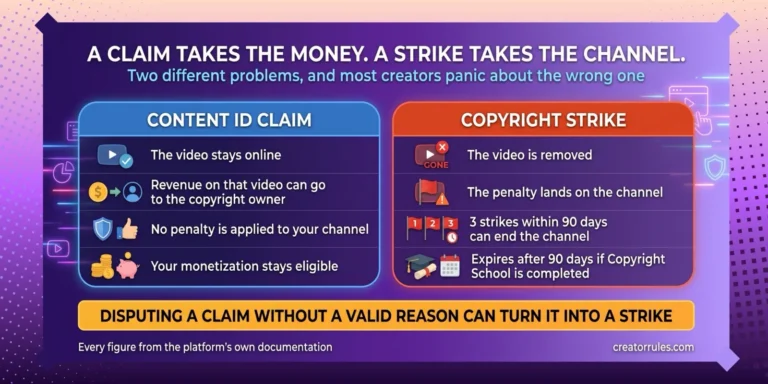
A claim takes the money on one video. A strike puts the whole channel at risk. And the dispute button is the bridge between them.
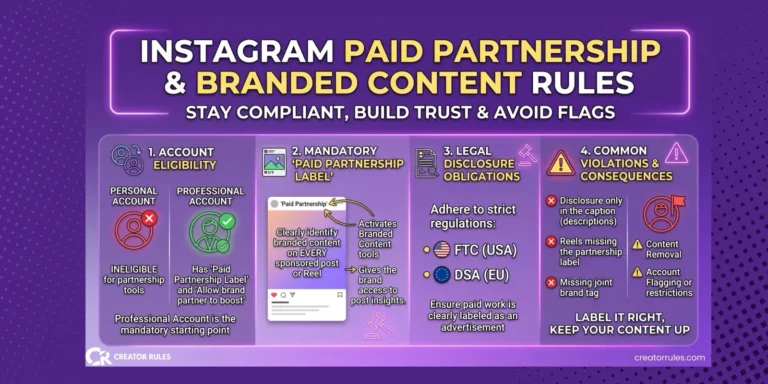
A personal account cannot use the label at all, a caption line does not replace it, and a gifted product triggers it just as a payment does.
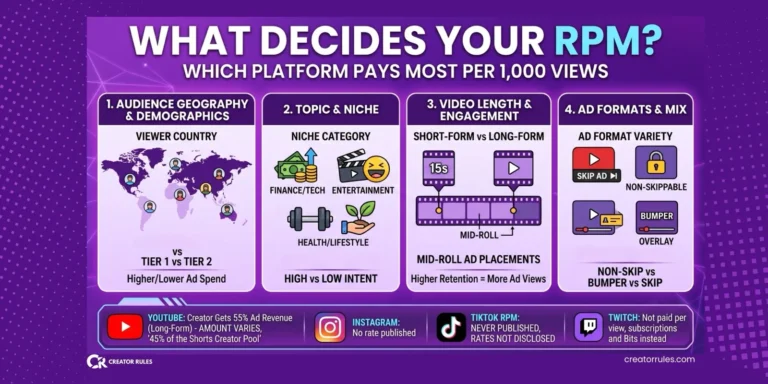
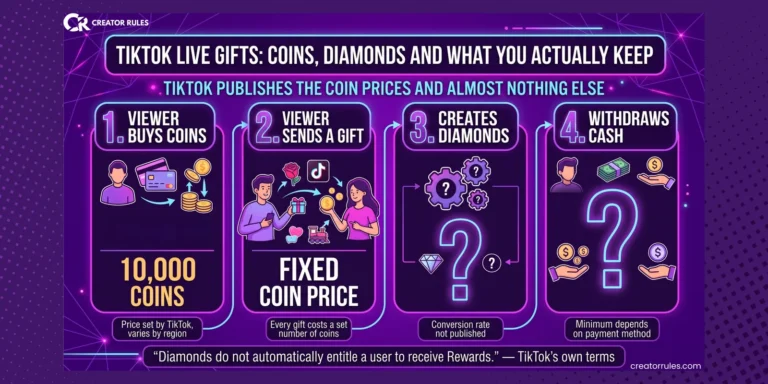
TikTok publishes what the viewer pays and nothing about what you get. Its own terms call diamonds a virtual item that does not automatically entitle you to a payment.
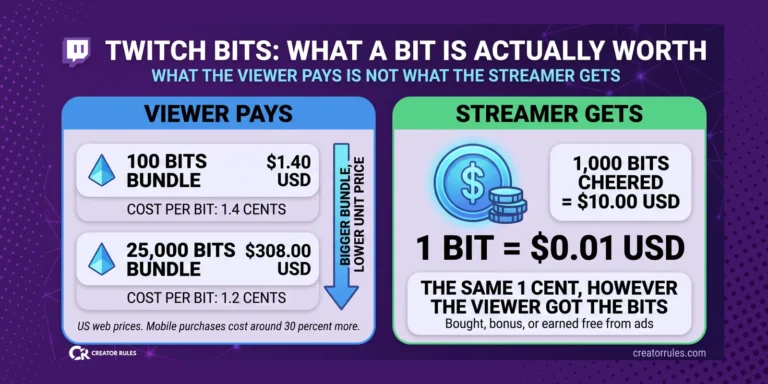
A Bit is one cent to the streamer and that number almost never moves. What changes is what the viewer pays, and in one case the viewer pays nothing at all.
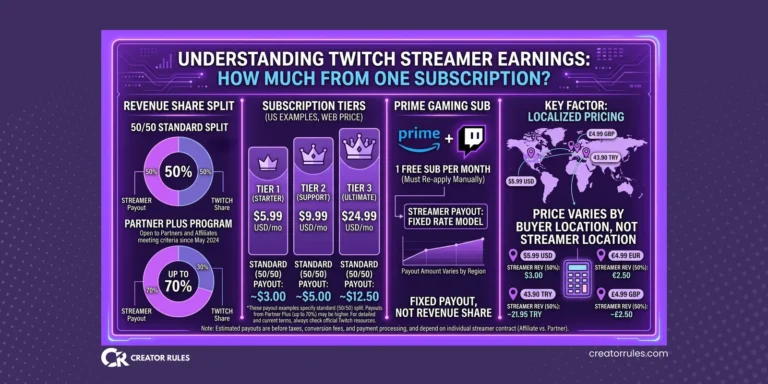
A Tier 1 sub is 5.99 dollars and the split is 50/50, so about three dollars. That is the least useful answer. Four things change the number, and one of them is worth 40 percent.
We use cookies to run this site and to fund it through advertising. You can change your choice at any time. Privacy Policy · Imprint