Instagram Monetization: What Actually Exists and Why There Is No Threshold List
Last updated: 8 September 2026. Every description below comes from Instagram’s own creator pages, linked at the bottom. Where Instagram does not state a figure, this article does not invent one.
Search for Instagram monetization requirements and you will find dozens of clean tables. 10,000 followers for subscriptions. 500 for gifts. A few cents per thousand Reels views.
Those tables have one thing in common. Instagram did not publish any of them.
This is the part that makes Instagram different from every other platform we cover, and it is worth understanding before you chase a number that may not apply to you.
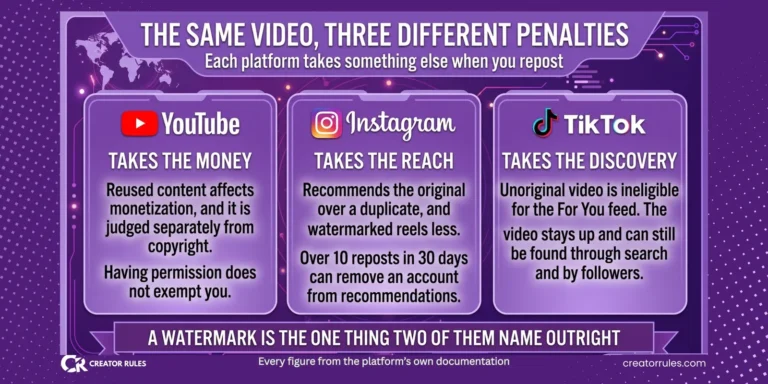
What every other platform does
| Platform | Published threshold |
|---|---|
| YouTube | 1,000 subscribers plus 4,000 watch hours or 10 million Shorts views |
| TikTok | 10,000 followers and 100,000 views in 30 days |
| Twitch | 25 followers, 4 hours streamed on 4 days, 3 average viewers |
| Nothing comparable on its creator pages |
YouTube, TikTok and Twitch each publish a page you can point at. You can read it, measure yourself against it, and know where you stand. We have compared all three side by side, and every figure in that table comes from the platform itself.
Instagram’s creator pages name the tools and describe what they do. They do not tell you when you qualify.
The six tools Instagram actually names
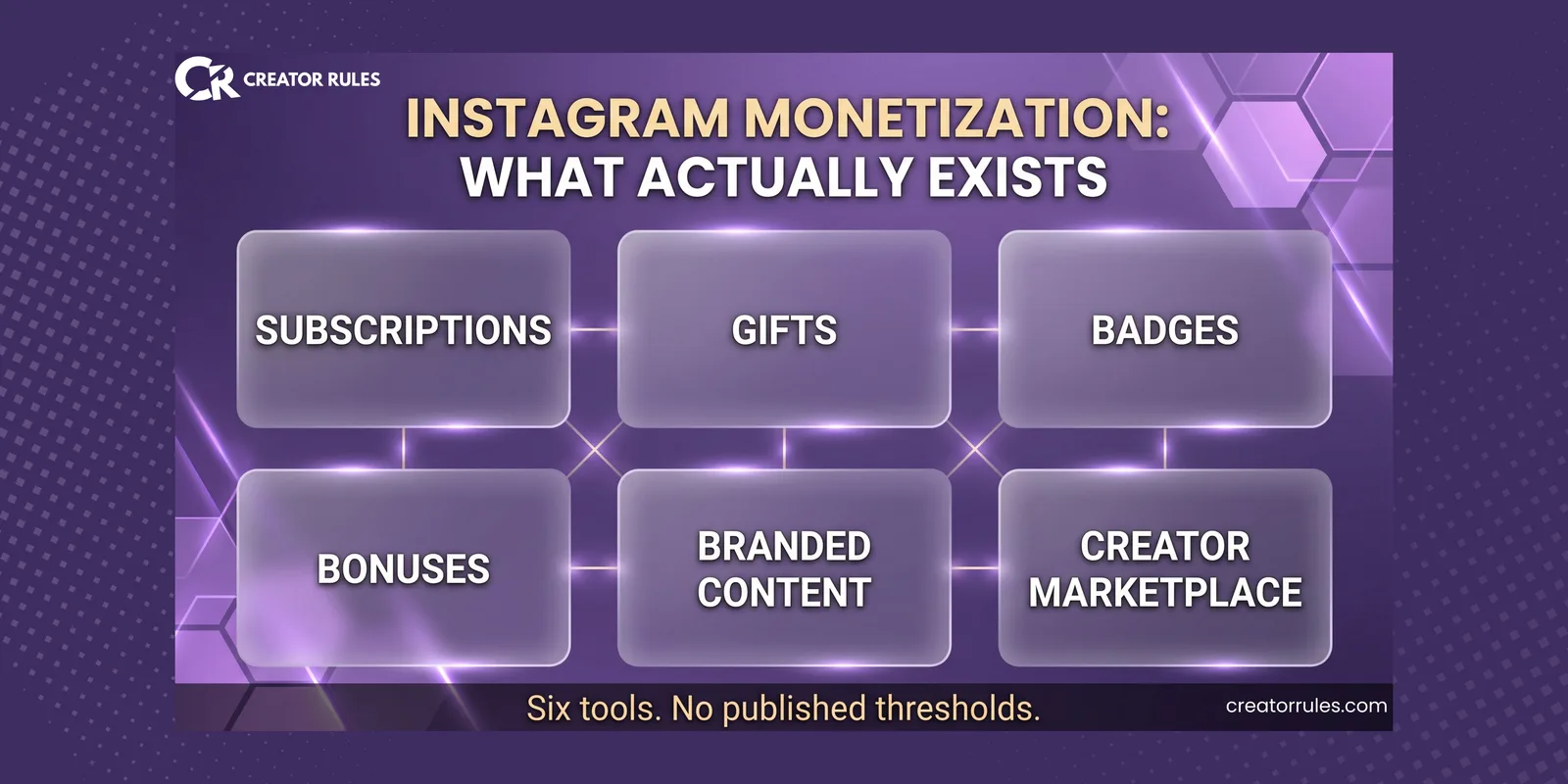
Start with what is real, because that part is not in dispute. Instagram’s own creator site lists these:
- Subscriptions, a recurring monthly payment from your audience
- Gifts, one-off virtual gifts viewers send on your content
- Badges, tipping during live video
- Bonuses, performance payments from Instagram itself
- Branded content and Partnership Ads, paid work with brands
- Creator Marketplace, where brands find you
Notice what that list is. Four of the six are ways for other people to pay you: your audience, or a brand. Only Bonuses is Instagram paying you directly, and it is the one with the least certainty attached.
Subscriptions
Subscribers pay a monthly fee. In return they see exclusive content marked with a purple ring, and they get a subscriber badge next to their name in comments and DMs so they stand out to you.
The price is a range you set yourself. Instagram’s page says exactly that and does not list the tier options.
One concrete figure Instagram does state: payouts arrive on the 21st of the following month. Earnings from March are paid on 21 April. That is worth knowing, because a subscription business has a month of lag built into it before the first money arrives.
Gifts and Badges
Both are the same idea at different moments. Gifts are virtual items a viewer sends on your content. Badges are the equivalent during a live video.
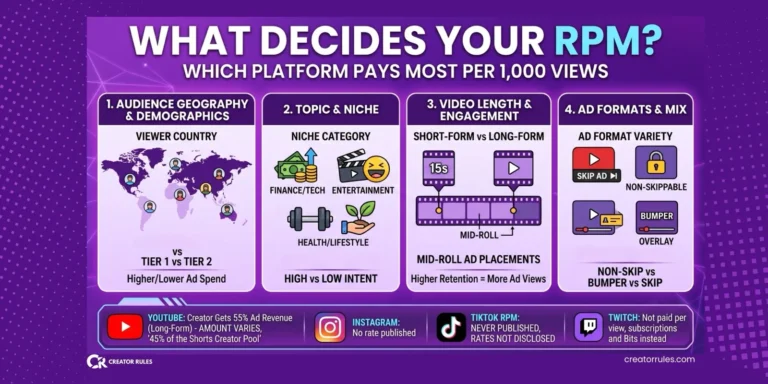
The viewer buys them, Instagram converts them to money for you, and the conversion rate and any thresholds are not stated on the creator pages. This is the same problem as TikTok, which publishes no RPM either. Every star or badge price you have read online comes from creators reporting what they saw in their own account, not from a Meta price list.
Bonuses, and what Instagram says about them
This is the only tool where Instagram pays you out of its own pocket, and it is the one most articles describe as if it were a standing programme with published rates.
Instagram’s own description is more careful than that. Bonuses are invite only and time limited, and Instagram states the reason plainly: it is still building a sustainable programme.
Two things follow from that, and both matter.
You cannot plan around it. An invitation that is time limited by design is not income you can forecast. If a bonus arrives, treat it as a windfall rather than a salary. Compare that with YouTube, where the rules for qualifying are written down and countable.
And it is not only Reels. Instagram states that bonuses reward the performance of Reels and photos, including single image and carousel posts. That contradicts a lot of advice telling creators to abandon photo posts entirely to chase bonus money.
Branded content, Partnership Ads and Creator Marketplace
These three are the brand side, and for most creators outside the very top tier they are where the actual money is.
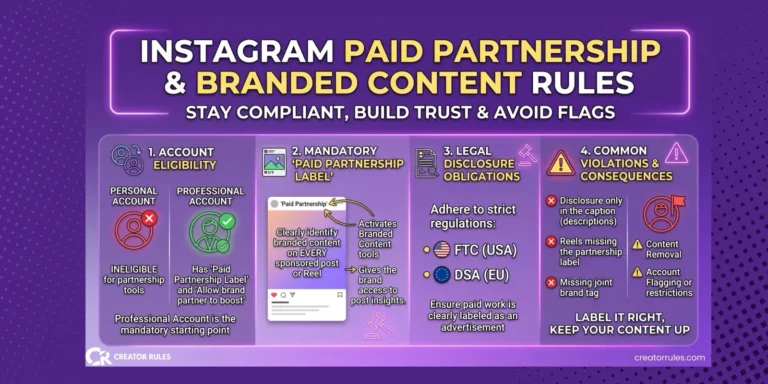
Branded content is a sponsored post or Reel, disclosed with the paid partnership label. Partnership Ads let the brand run your post as an ad from its own account. Creator Marketplace is the discovery layer where brands search for creators to work with.
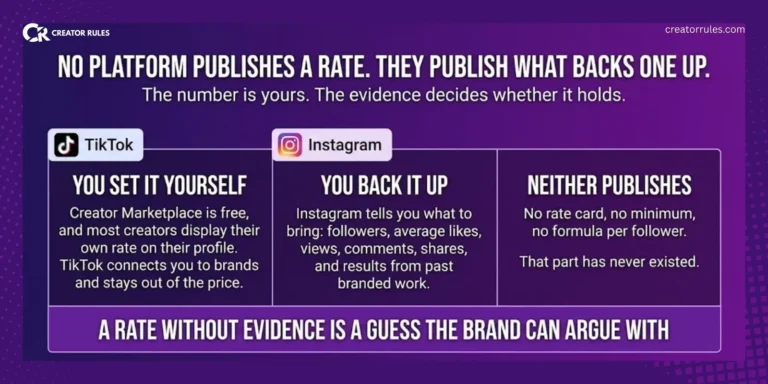
There is no rate card here and there could not be. What a brand pays is negotiated, not published. Which is another way of saying that the ceiling on this route is set by your audience and your negotiation, not by a threshold Instagram controls.
Branded content also carries a labelling obligation, and it applies to gifted products just as much as to paid deals: the paid partnership label.
Why there is no threshold list
Instagram does publish eligibility rules. They are just not the kind you can measure yourself against in advance.
Your account and content have to comply with the Community Standards, the Partner Monetization Policies and the Content Monetization Policies. On top of that there are product eligibility requirements covering accounts, behaviour and payments, and they differ per tool.
That is a compliance test, not a scoreboard. It is assessed per account and per product, and the answer for your account lives inside the app rather than on a public page.
So the honest answer to “how many followers do I need for Instagram monetization” is that Instagram does not answer it publicly. Anyone who gives you a clean number is reporting what they saw in one account, or repeating someone who did.
Where to actually check
Since the threshold is not published, the only reliable check is your own account.
Open the Professional Dashboard in the app. Instagram surfaces the monetization tools you are eligible for there, and the ones you are not. That single screen is worth more than any table you will find in search results, because it is about you rather than about someone else’s account in another country.
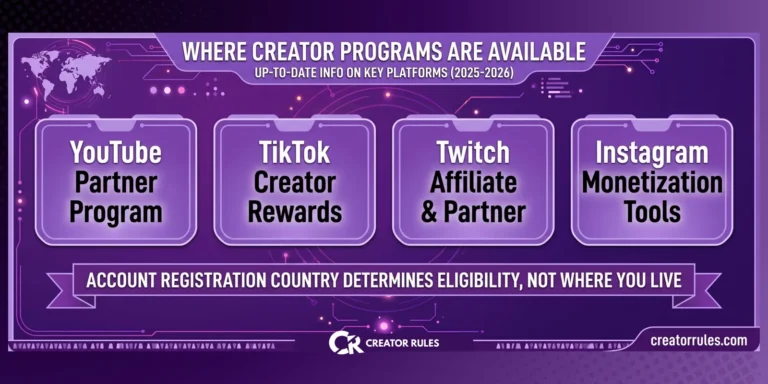
Two things are worth doing while you are in there. Check which tools are switched on for your region, because availability is not the same everywhere. And read the eligibility policies rather than skimming them, since the most common reason for losing access is a compliance problem rather than a follower count. If you do get paid, US tax withholding applies to Instagram earnings the same way it does anywhere else. Each platform collects that information in its own place, so completing it on one does nothing for another. We explained how the withholding works and what a treaty changes.
What to take from this
The tools are real. Subscriptions, Gifts, Badges, Bonuses, branded content and the Creator Marketplace all exist and creators are paid through them.
What does not exist is the tidy requirements table that dominates search results for this topic. Chasing a follower count you read on a blog is optimising for a number Instagram never set.
The practical version: build the audience, keep the account compliant, check the Professional Dashboard for what has opened up, and treat Bonuses as a bonus. On this platform, the brand route is the one with no gatekeeper at all.
Sources
- Instagram for Creators: Earn cash making what you love
- Instagram for Creators: Subscriptions
- Instagram for Creators: Bonuses
- Instagram Help Center: Product eligibility requirements for monetization tools
Instagram changes these tools regularly and availability differs by country. Check the Professional Dashboard in your own account and the pages linked above before making decisions based on this article.