What Does Kick’s 95/5 Split Actually Cover?
Kick’s 95/5 split is the most quoted number in live streaming. Ninety five percent to the creator, five percent to the platform, and every comparison article stops there.
The number is real and Kick publishes it plainly. What almost nobody checks is the sentence around it: which revenue it applies to, what the five percent actually is, and the one condition that cuts the whole thing in half.
The split covers two revenue streams, not all of them
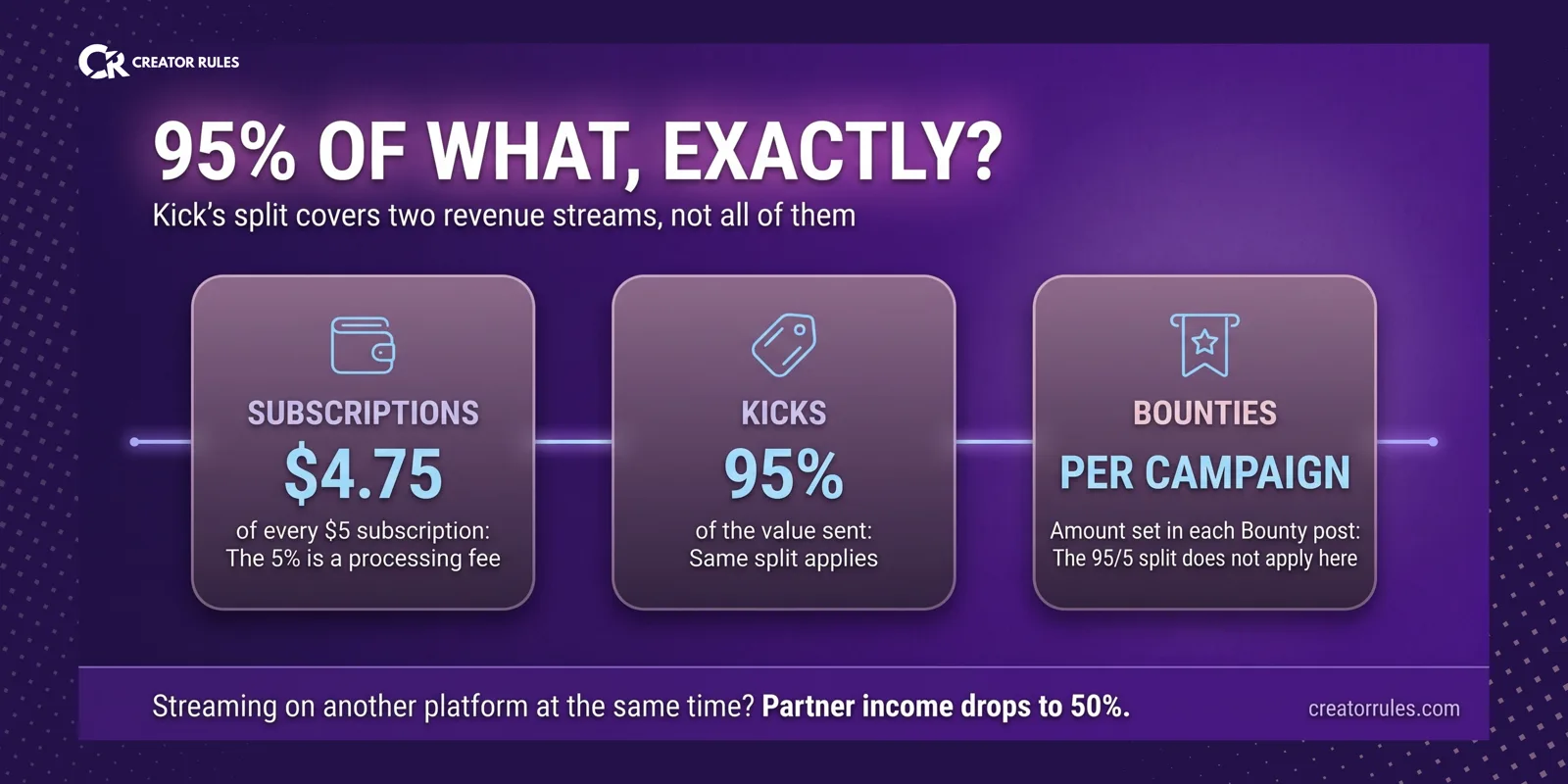
Kick’s own wording is short: you keep 95% of all revenue you receive, and the other 5% is taken as a processing fee.
In practice that applies to two things.
Subscriptions. A Kick subscription is a flat $5 a month. When a viewer subscribes, you receive $4.75 and the processing fee is $0.25. There are no tiers to work through and no currency maths to do first.
KICKS. This is Kick’s tipping currency, sent during a stream. You receive 95% of the value sent. Kick does not publish what a single KICK is worth in dollars, so the percentage is the whole of what you can rely on here.
That is the list. Two streams, one rate.
The 5% is a processing fee, not a platform cut
This is the part that changes how the number should be read, and Kick says it in its own sentence: the 5% is a processing fee, meaning Kick takes no percentage of your earnings.
That is a different claim from a generous revenue share. A revenue share is the platform taking a portion and giving you the rest. Kick is describing something closer to a payment rail: money moves, the processor takes its cost, and the platform does not stand in the middle taking a slice.
Whether you find that compelling is up to you. But it is the claim Kick is actually making, and it matters for the comparison people usually try to draw.
Bounties sit outside the split
Bounties are Kick’s brand campaign system, and the 95/5 rate does not describe them. Kick says bounty rewards vary by campaign and the amount you can earn is set in each individual Bounty post.
So a creator earning from subscriptions, KICKS and bounties is being paid under two different arrangements at once. The 95/5 figure tells you nothing about the third one, and the only place to find that number is the campaign itself.
Multistreaming halves it, and this is the condition nobody mentions
Here is the clause that never makes it into the comparison tables. If you multistream with the toggle enabled, Kick reduces your payout by 50% for the duration of the multistreaming session.
Read what that does to the headline. A Kick partner who also goes live on Twitch or YouTube at the same time is not on 95/5 during those hours. The split is conditional on Kick having you to itself while you are streaming.
There is an exception worth knowing, and it is a useful one. The reduction applies to long form livestreaming platforms such as Twitch and YouTube. It does not apply if you are also going live to short form or vertical platforms: TikTok LIVE, YouTube Shorts and Instagram Live are outside it.
So simulcasting to a vertical platform for discovery costs you nothing, and simulcasting to a competing long form platform costs you half. That is a deliberate line, and it is the single most practical thing in this entire topic.
Why “95 versus 50” is the wrong comparison
Twitch’s standard subscription split is 50/50, and the Plus Program lifts qualifying streamers to 60/40 or 70/30. Put those next to 95/5 and the conclusion looks automatic.
The more useful difference is not the percentage, it is how many deductions happen before you see your share.
Twitch’s own description of the 50/50 is that you and Twitch each receive half of the remaining subscription revenue after applicable deductions, and it names them: taxes, payment processing fees and currency conversion fees. The processing cost comes off first, and the platform split is applied to what is left. That is two separate reductions, and only one of them is the number everyone quotes. We went through what that leaves in practice in what a Twitch streamer actually earns from one subscription.
On Kick, by its own account, there is one: the processing fee. Nothing is taken after it.
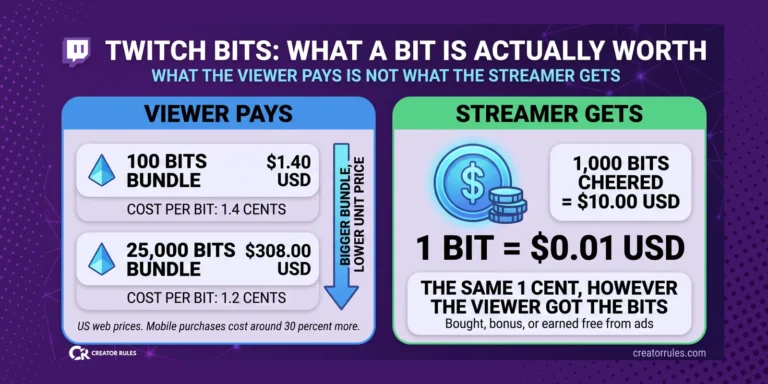
One more thing to keep straight when comparing. Twitch’s percentages above are subscription figures. Bits are a separate revenue stream with their own rate, where one Bit is worth one cent to the streamer. Dropping a Bits number into a subscription comparison, which plenty of articles do, compares nothing at all. The same discipline applies on Kick: subscriptions and KICKS share a rate, bounties do not.
Getting to Partner, and getting paid
The 95/5 split belongs to the Partner program, so the entry conditions are part of the real answer. Kick asks for at least 30 hours streamed and 250 unique chatters in the last 30 days, at least 25 active subscribers and 250 followers, and an average of 75 concurrent viewers. Your channel has to be verified before you apply.
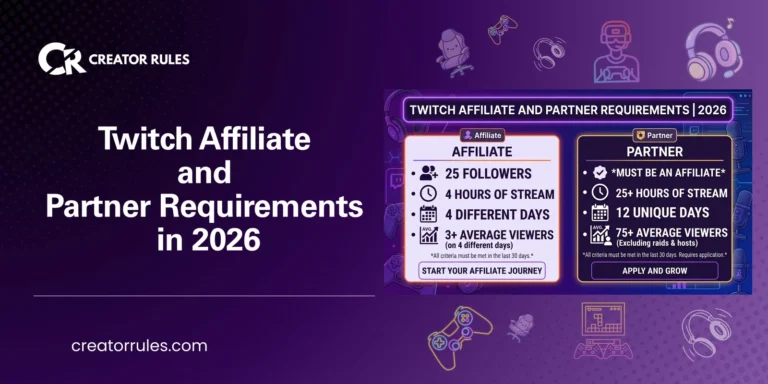
Worth sitting with that last number. Seventy five average concurrent viewers is a different kind of requirement from a follower count, because it has to be true while you are live rather than accumulated over time. For context on how a comparable ladder is structured elsewhere, see the Twitch Affiliate and Partner requirements.
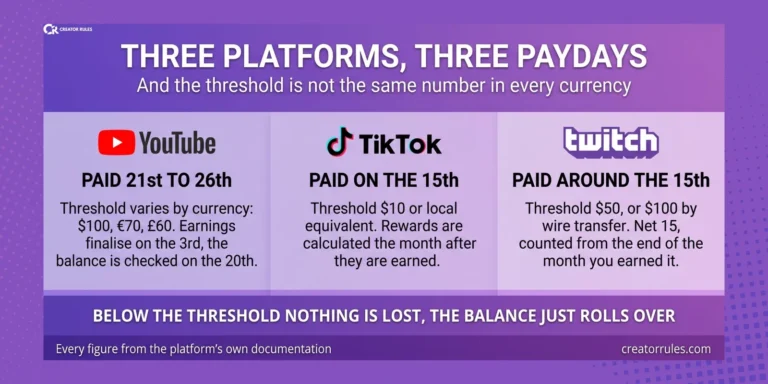
On the payment side Kick is unusually light. Payments are made in any month where the amount due reaches at least $10, and anything under that accrues to the next month rather than disappearing. Verified streamers can choose weekly or monthly payouts; everyone else is monthly. That $10 floor is low next to the thresholds on the other platforms, which we laid out in when each platform actually pays you.
What to check before you decide
If you are weighing a move, the headline rate is the easiest part of the decision and the least informative.
Work out which of your revenue actually falls under the split. Subscriptions and KICKS do. Bounty income is negotiated per campaign and is not covered by the rate at all, and advertising is a separate question entirely: Kick has opened its platform to advertisers, but it does not publish a creator share for ad revenue, so anyone quoting one is not quoting Kick.
Then be honest about the multistreaming clause. If going live on two long form platforms at once is part of how you reach people, the number you should be comparing is not 95.