Every YouTube Feature Announced for 2027
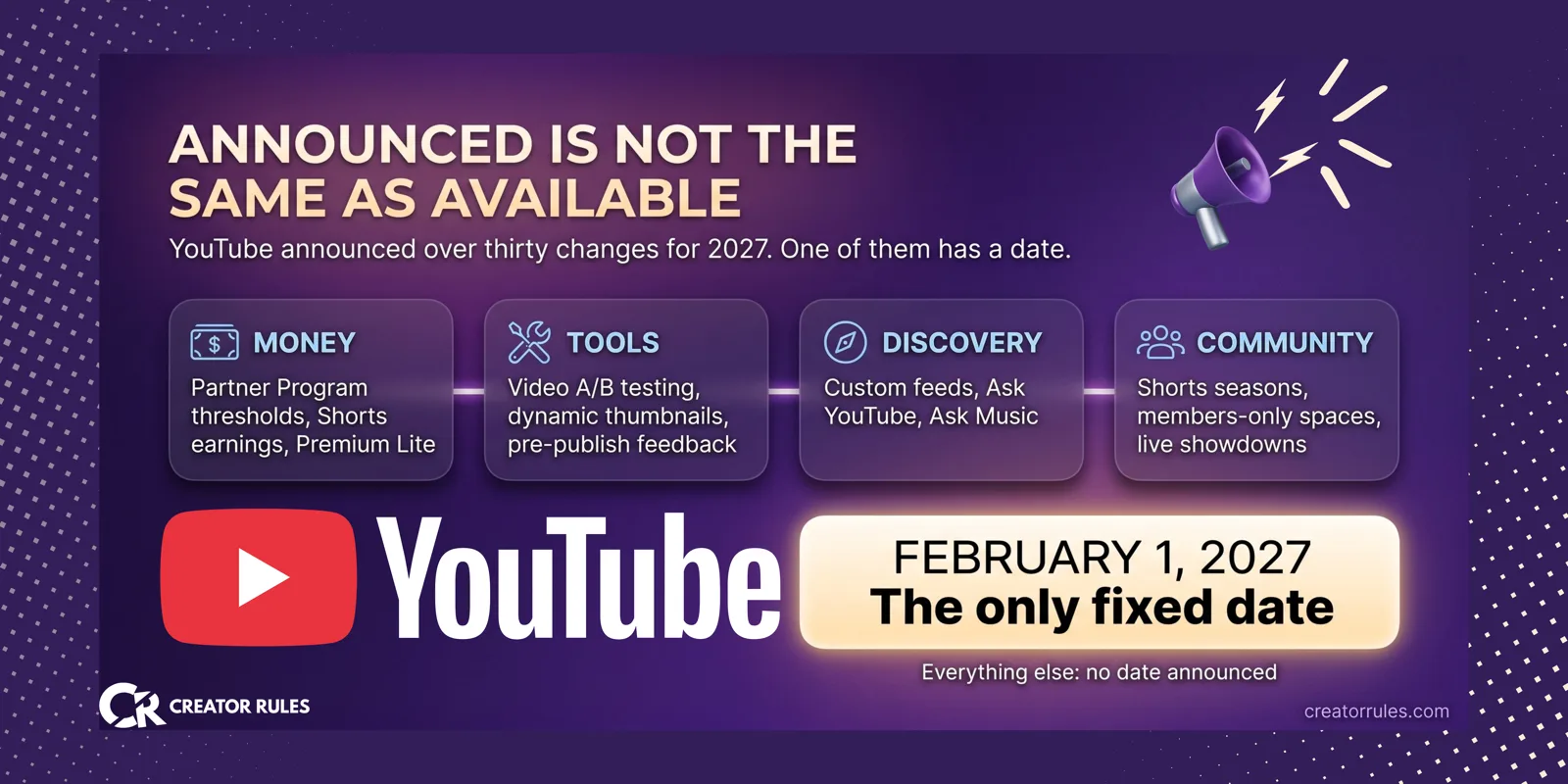
YouTube announced more than thirty changes at Made on YouTube, and a separate set of Partner Program updates that take effect on 1 February 2027. Put together, it is the largest batch of changes the platform has announced in years.
It is also the most misreported. Almost every roundup presents the list as though it ships next week. It does not. Announced and available are two different things, and for most of what follows YouTube has given no date at all.
This page is the short version of everything confirmed so far, what is still unknown about each item, and when it actually arrives. We keep it updated as features open up.
The one date that is actually fixed
Everything in this section happens on 1 February 2027. It is the only hard date YouTube has published, and it is the part that touches money.
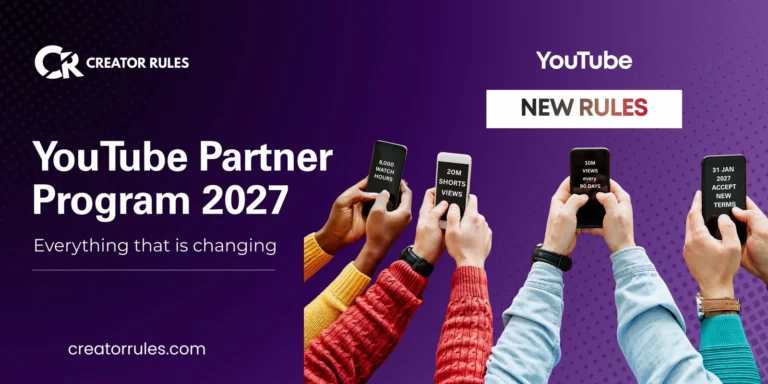
New applicants need different numbers. Joining the Partner Program will require 1,000 subscribers plus either 8,000 qualified watch hours in the last 365 days or 20 million qualified Shorts views in the last 90 days. Existing members keep their status. The full breakdown is in the Partner Program requirements.
Shorts earnings get a maintenance threshold. To keep earning each month from the Shorts Creator Pool, a channel will need to maintain 10 million qualified Shorts views over the rolling 90 days. Miss it and you are not removed from the programme and your long form earnings are untouched, but the Shorts pool payment stops until you are back above it. The difference between this 10 million and the 20 million above catches a lot of people out, and we went through both in the Shorts monetization thresholds.
Targeted Shorts ads pay separately. If an advertiser targets an ad at a group of five or fewer channels, eligible creators earn a direct 45% revenue share from those placements, paid on top of the usual Creator Pool share. This is new money rather than a change to existing money.
Premium Lite goes everywhere. YouTube is expanding Premium Lite to all countries where Premium is offered, with a dedicated revenue pool for each subscription type. How those pools are built and split is covered in how Premium views pay.
And there is a deadline attached. Updated terms have to be accepted in YouTube Studio by 31 January 2027. Creators who have not accepted them stop earning from the associated monetization features from 1 February.
Creation tools
Video A/B testing. Until now you could test up to three titles and thumbnails. YouTube says you will be able to test up to three different cuts of the video itself to see which hook holds attention best. Unknown: whether the test can isolate a single change, and how it behaves on channels running multiple audio tracks. We went through both limitations in what video A/B testing can and cannot tell you.
Dynamic thumbnails. YouTube recommends the best of three options to different segments of your audience, rather than picking one winner for everyone. Unknown: whether the creator defines the segments or YouTube does. We went through what that changes about making thumbnails in who decides which thumbnail you see.
Channel-matched thumbnail generation. Studio generates thumbnail options in your channel’s existing visual style.
Pre-publish feedback. Studio will give personalised advice on pacing, structure and storytelling while a video is still a draft. Unknown: what the advice is based on, and how specific it gets. What that means for the way you work is in whether YouTube will tell you a video is weak before you publish it.
Conversational editing. A Gemini-powered assistant in Shorts and the YouTube Create app that handles the repetitive parts of an edit: trimming pauses, reordering for pacing, syncing cuts to music.
How viewers will find videos
This is the section creators are paying the least attention to and probably should be watching most closely, because it changes the shape of the home page.
Custom feeds. Viewers will be able to build their own home page feeds by describing what they want in plain language, and save several of them. A feed built from a description is a different discovery surface from one built from watch history. What that changes for the channels people find is in how custom feeds change who finds your videos.
Ask YouTube. An assistant that answers a question by pulling the relevant moment out of a video, with a side panel for follow up questions about what you are watching. It is positioned partly as a product recommendation tool, which puts review and comparison content directly in its path. Which videos that actually threatens, and what YouTube has not disclosed, is in will Ask YouTube cost you the view.
Ask Music. The same idea applied to playlists and podcast discovery.
Formats and community
Shorts seasons and episodes. Shorts can be organised into seasons and episodes, aimed squarely at microdramas and serialised vertical content. For anyone making a series one Short at a time, this is the difference between a scattered upload history and something a viewer can follow. How that changes the way a series is planned is in turning your Shorts into a series with seasons and episodes.
Live showdowns. Two creators can merge their live streams into a head to head format.
Real-time auto dubbing on live. Live streams dubbed as they happen.
Watch With expands to long form. Previously limited, now extending to full length videos.
Members-only spaces. A community area for channel members, closer to what creators currently leave YouTube to build elsewhere.
AI comment moderation. Moderation that learns a channel’s own standards over time rather than working from a keyword list.
Direct messaging. Private messages are back, and unlike most of this list the feature is already live rather than promised: it runs in 40 locations today. The requirements are tighter than people assume, with an age check and a channel requirement, and on a Brand Account only the owner can use it, which leaves moderators and delegates out. It is also not the creator to creator feature it was read as, because everyone signed in has a channel. The detail is in whether creators can message each other on YouTube again.
Likeness detection
The likeness detection tool, which finds AI generated videos using a creator’s face, is moving to mobile so enrolment and takedown requests can be handled from a phone. YouTube is also adding speaking voice detection alongside facial detection to improve match accuracy.
This is the quietest announcement on the list and arguably the most consequential, because it is the only one that deals with someone else using your identity rather than with how you make or sell your own work.
When any of this actually arrives
Here is the part the roundups skip.
The 1 February 2027 monetization changes have a date because they are contractual. Almost nothing else does. YouTube described the majority of the Made on YouTube features as coming soon without attaching a month, and the pattern the platform has followed for years is a staged rollout: the United States first, then selected channels elsewhere, then general availability.
That means a feature announced with a stage demo in September may reach an average channel outside the US much later, and some announced features historically do not ship in the form they were demonstrated. Treating the list as a plan for next quarter is a mistake. Treating it as the direction the platform is moving is not.
Regional staging is its own obstacle and not a new one. We looked at how unevenly programmes reach different countries in where creator programmes are actually available.
What is worth doing now
Two things, and only two.
Accept the updated terms in Studio before 31 January 2027. This is the single item on the whole list with a deadline and a consequence, and it takes a few minutes.
If Shorts are a meaningful part of your income, start watching your rolling 90 day view count against 10 million now. Not on 1 February, when the threshold is already live. The number you need is visible in your analytics today.
Everything else on this page is worth understanding and nothing else on it is worth restructuring your channel around yet. We track each change as it moves from announcement to availability in the creator platform rule changes timeline.