Which Platform Pays Most Per 1,000 Views (And Why Nobody Can Tell You)
This is one of the most searched questions in the creator world, and almost every answer to it is invented. Type it into Google and you get neat tables: so many dollars per thousand views on YouTube, so many on TikTok, so many on Instagram. Those tables look authoritative. Almost none of the numbers in them come from the platforms.
Here is the honest version. Two of the four big platforms have never published a per view rate at all. One of them does not pay per view in the first place. And the one platform that does publish its share publishes a percentage, not an amount, because the amount changes with every single video.
That is not a dodge. Once you see what actually decides the number, you can work out your own, and you will stop comparing yourself to a table that was never real.
RPM and CPM are not the same thing, and this is where most comparisons break
Almost every viral comparison mixes these two up, which is why the numbers in them are so wildly different from what creators see in their own dashboards.
CPM is what an advertiser pays for a thousand ad impressions. It is a buying price, measured before the platform takes its share.
RPM is what lands in your account per thousand views of your content, after the platform has taken its share, and counting every view including the ones that never showed an ad at all.
Those two numbers are never close. A high CPM does not translate into anything like the same amount per thousand views for you. The platform takes its cut, and then a large share of your views carry no ad at all. A creator quoting a CPM they saw somewhere, and a creator quoting their real RPM, are describing two different things with the same confidence.
What each platform actually publishes
This is the whole verified picture, and it is shorter than you would expect.
| Platform | What is published |
|---|---|
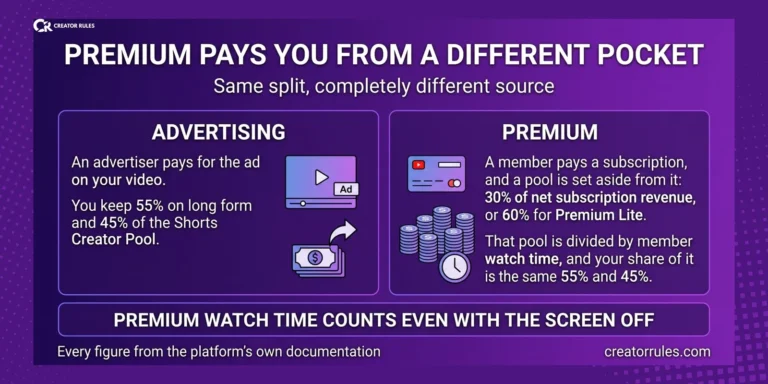
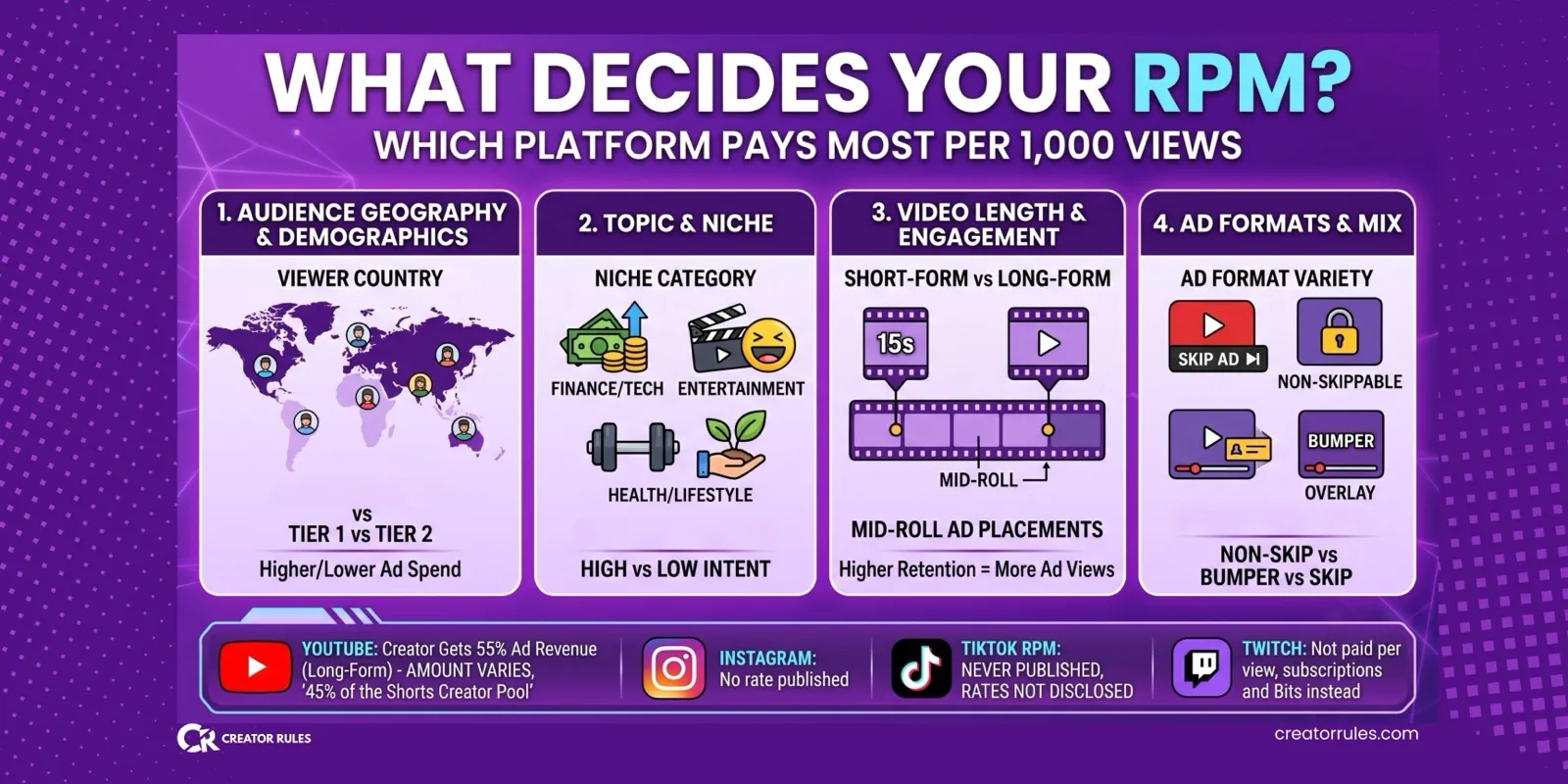
| YouTube | Creators receive 55% of net revenue from ads on the watch page, and 45% of the revenue allocated from the Shorts Creator Pool |
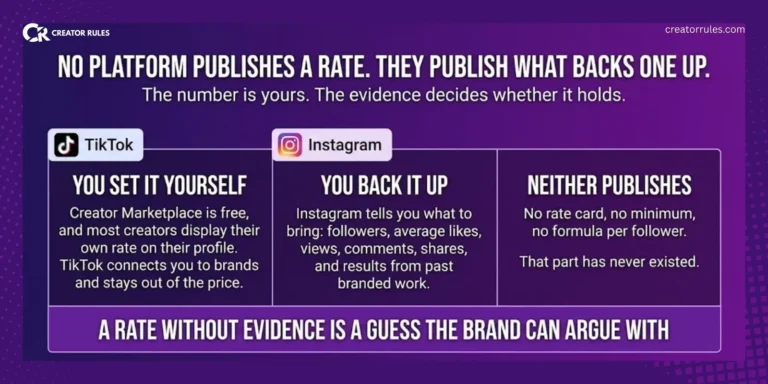
| TikTok | No rate published. The Creator Rewards Program pays on qualified views, but the rate has never been disclosed |
| No rate published. Instagram lists its monetization tools without attaching a single figure to any of them | |
| Twitch | Not a per view payment at all. Income comes from subscriptions and Bits, and those splits are published |
Read that table again and notice the shape of it. YouTube tells you the share. It cannot tell you the amount, because the amount depends on what advertisers paid for your particular audience that particular month. Everyone else either does not publish a rate or does not work that way.
So when someone hands you a confident dollar figure for TikTok, the question worth asking is simple: where did that come from? It came from creators reporting what they saw in their own dashboards. That is real information, but it is their audience, their country and their month, not yours.
Factor one: where your viewers are
This is the single biggest lever, and it is almost entirely outside your control.
Advertisers bid to reach people, and what they will pay to reach someone varies enormously between markets. A channel with an audience concentrated in the United States, Germany or Australia will earn a multiple of what an identical channel earns with an audience in a lower advertising spend market. Same video, same length, same topic, same effort.
This is why two creators with identical view counts can report completely different earnings and both be telling the truth. It is also why chasing views alone is a poor strategy. A hundred thousand views from an audience advertisers are not bidding for is worth less than ten thousand from one they are.
Factor two: what your videos are about
Advertisers do not pay for attention in the abstract. They pay for attention from people who might buy something specific.
That is why finance, software, insurance and business content sits at the top of the range, and why general entertainment, gaming and comedy sits lower even at enormous scale. The entertainment channel is not doing worse work. It is simply carrying an audience that fewer advertisers are competing for.
The practical consequence is that a small, focused channel in a commercial niche can out earn a much larger general channel. That happens constantly, and it surprises people because view count is the only number most creators compare.
Factor three: how long your videos are
A short video can carry one ad. A longer one can carry several, because mid-roll placements become available once a video passes a certain length.
This is the most direct link between a decision you control and the money you see. It is also the main structural reason long-form and short-form earnings look so different on the same channel. We went through that split in detail in our piece on how Shorts monetization actually works, and the short version is that Shorts revenue comes from a shared pool rather than from ads placed against your specific video.
Length is not a magic lever though. Padding a video to unlock a mid-roll works until viewers leave before reaching it, and then you have fewer ad views, not more.
Factor four: which ads actually get served
Not every view carries an ad. This is the part that surprises people most when they first look closely at their own numbers.
Whether an ad runs at all depends on advertiser demand for that viewer at that moment, whether the viewer is on YouTube Premium, and what your video is eligible for. Skippable, non-skippable, bumper and overlay formats all pay differently, and you do not choose which one a given viewer sees.
Put together with the other three factors, this is why a single number can never describe a channel. Your RPM is not a property of the platform. It is a property of your audience, your topic, your format and the month.
The season nobody warns you about
Advertising budgets are not spread evenly across the year. They build through the final quarter and drop sharply once the new year starts.
The effect on creator earnings is large enough to cause genuine panic. The same channel, with the same audience watching the same kind of video, sees noticeably lower revenue in January than it did in December. Every year a wave of creators concludes they have been penalised, shadowbanned or demonetized. Usually they have simply reached January.
If your earnings drop while your views hold steady, check the calendar before you check for a strike.
So which platform pays most
For per view advertising revenue, YouTube long-form is the only one of the four with a published share and a mature ad system behind it, and for most creators it will produce the highest revenue per thousand views. That is a defensible statement. A dollar figure attached to it would not be.
But per view income is not the whole picture, and treating it as such is how creators end up on the wrong platform. Twitch does not pay per view and never claimed to. Its income comes from subscriptions and Bits, and a streamer with a small committed audience can out earn a channel with far more views. We covered the mechanics of that in our piece on what a Twitch subscription actually pays.
The same applies to Instagram, where the monetization tools are listed without any published figures, and to TikTok, where the platform publishes what the viewer pays but not what the creator receives.
How to find your own number
You already have the only figure that matters, and it is more useful than any comparison table.
Take your revenue for a full month, divide it by your views for the same month, and multiply by a thousand. That is your RPM. Do it for three separate months and you will see your own range, including the seasonal swing.
Then look at where it comes from. Your analytics will show you which countries your views come from and which videos earned most per view. Those two screens will tell you more about your earning potential than every comparison article on the internet combined, because they describe your channel rather than an average of channels that are nothing like yours.
If a number in a comparison table does not match what you see, the table is not exposing a problem with your channel. It is exposing a problem with the table.
What to take from this
Nobody can tell you what a thousand views pays, and anyone who does is quoting an average of channels that have nothing in common with yours.
What can be said with confidence is this. YouTube publishes its share and pays 55% on watch page ads and 45% from the Shorts pool. TikTok and Instagram publish no rate at all. Twitch does not pay per view. And four things move your own number more than the choice of platform does: where your viewers are, what your videos are about, how long they run, and whether an ad gets served at all.
If you want to compare platforms on more than advertising revenue, our side by side comparison of the monetization programs covers the entry requirements and what each one actually unlocks.
Sources
- YouTube Help, YouTube partner earnings overview, revenue share for watch page ads and Shorts
- YouTube Help, YouTube Shorts monetization policies, Creator Pool allocation
- TikTok, Creator Rewards Program terms and Virtual Items policy
- Instagram for Creators, monetization tools overview
- Twitch, subscription revenue share and Bits documentation